Beyond Blue Carbon: How Dugongs Are Helping Fight Climate Change
Bahrain 
Beyond Blue Carbon: How Dugongs Are Helping Fight Climate Change
When we talk about climate change, the conversation usually focuses on reducing emissions, restoring forests, or protecting habitats such as mangroves and seagrass meadows.
Rarely do we ask another question:
What role do wildlife species themselves play in regulating our planet?
At Nuwat, this question sits at the heart of how we think about nature.
Ecosystems are not simply collections of habitats. They are living, interconnected systems where plants, animals, fungi, and microorganisms constantly interact with one another. Remove one piece of that system, and its ability to function begins to change.
Yet, despite decades of climate research, wildlife has largely been absent from discussions surrounding carbon storage and climate mitigation.
Our latest research, published in Frontiers in Marine Science, explores why that needs to change.
Animating the Carbon Cycle
Our study introduces the concept of Animating the Carbon Cycle (ACC) which is a model developed by Prof. Oswald Smitchz at Yale University and the Global Rewilding Alliance.
The idea is both simple and profound. Carbon does not move through ecosystems on its own.
Animals influence where carbon is stored, how nutrients are recycled, how vegetation grows, and ultimately how ecosystems function. Through feeding, grazing, movement, nutrient transport, and countless ecological interactions, wildlife actively shapes the natural processes that regulate carbon.
In other words, animals do not simply live within ecosystems, they help ecosystems work.
Dugongs: More Than an Endangered Species
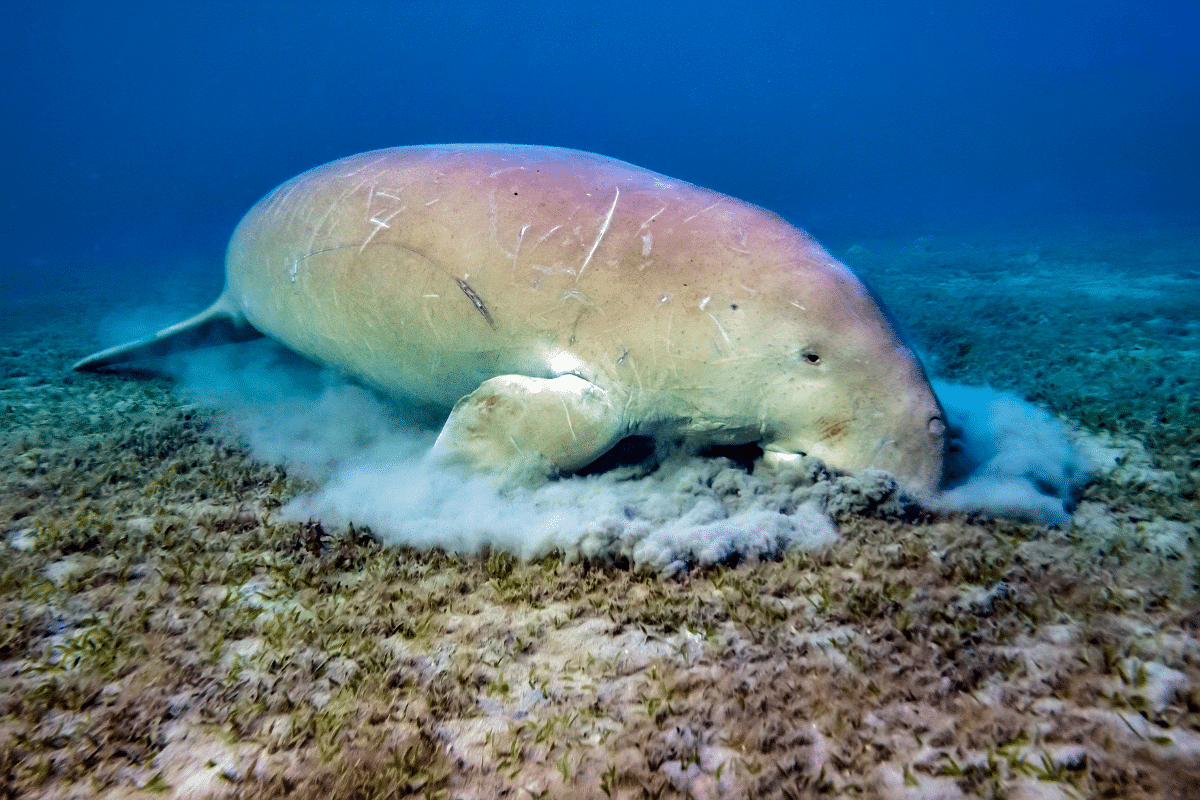
To explore this concept and apply it for the first time worldwide on a marine ecosystem, we focused on one of Bahrain’s most iconic marine mammals: the dugong (Dugong dugon).
Dugongs are often called the “gardeners of the sea” because they feed on seagrass throughout their lives.
At first glance, grazing might appear harmful. In reality, healthy grazing stimulates new seagrass growth, redistributes nutrients, and helps maintain productive meadows.
These meadows are among the world’s most efficient natural carbon sinks, storing carbon both within the plants themselves and deep within the sediments beneath them.
The question we asked was simple: Could dugongs be helping these ecosystems capture and store more carbon?
What We Found
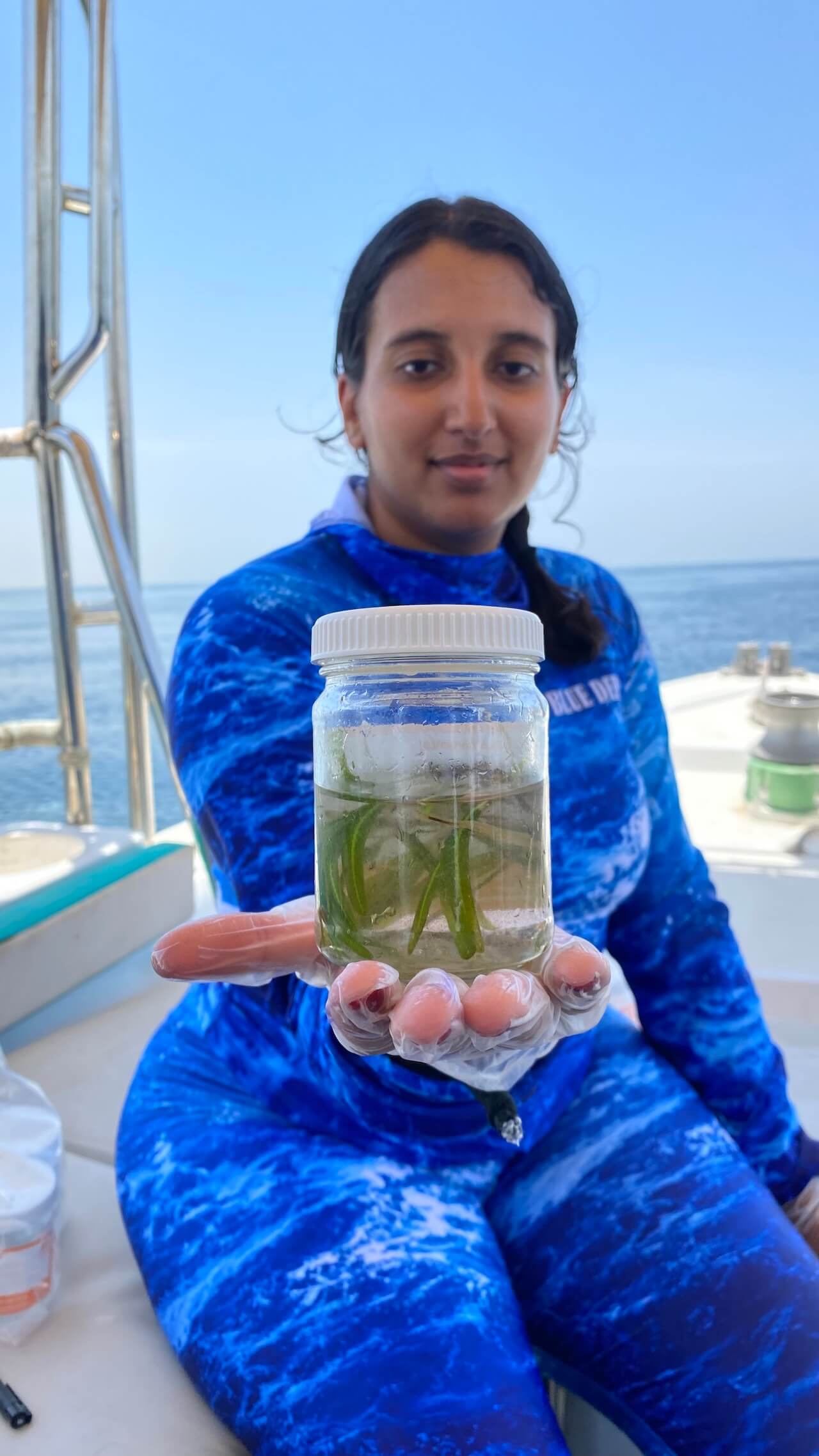
Our findings suggest they are. By comparing seagrass ecosystems with and without dugong grazing, we found that ecosystems supporting dugongs demonstrated significantly greater carbon capture and storage potential.
These ecosystems exhibited:
- Approximately 2.3 times greater Net Ecosystem Carbon Balance (NECB).
- Around 2.6 times greater sediment carbon storage.
- An estimated 578,000 tonnes of CO₂ equivalent captured annually within Bahrain’s dugong-supported seagrass ecosystems.
- More than 5 million tonnes of CO₂ equivalent stored within the underlying sediments.
These findings suggest that conserving dugongs is not only important for biodiversity, it may also help maintain the ecological processes that underpin one of Bahrain’s most valuable natural climate solutions.
Rethinking Climate Solutions
For many years, climate policy has largely viewed ecosystems as static landscapes capable of storing carbon. However, ecosystems are dynamic as they depend upon ecological interactions. When wildlife populations decline, ecosystems often lose the very processes that allow them to remain healthy and resilient.
Protecting habitats without protecting the species that shape them is a little like protecting a city while removing the people who keep it running. Wildlife should not be viewed as an afterthought in climate policy. It should be recognised as part of the solution.
Why Rewilding Matters
This is where the concept of rewilding becomes so important. Rewilding is often misunderstood as simply bringing species back into nature. In reality, it is about restoring ecological processes. It is about allowing nature to recover its ability to regulate itself by restoring the relationships between species and their environments.
Whether it is wolves influencing forests, whales transporting nutrients across oceans, elephants shaping savannahs, or dugongs maintaining productive seagrass meadows, wildlife helps ecosystems function in ways we are only beginning to fully understand.
As these ecological relationships recover, so too does nature’s ability to support biodiversity, strengthen resilience, and contribute to climate regulation.
From Research to National Policy
One of the most rewarding outcomes of this research is seeing it move beyond the pages of a scientific journal.
The findings have informed Bahrain’s Nationally Determined Contribution (NDC) under the Paris Agreement, demonstrating how biodiversity conservation and climate action can work hand in hand.
This is exactly the kind of science Nuwat strives to produce. Science that informs policy, supports conservation and helps people see nature differently.
Looking Forward
Climate change and biodiversity loss are often treated as separate global crises. In reality, they are deeply connected. The more we understand the roles that wildlife plays in maintaining healthy ecosystems, the clearer it becomes that conservation is about much more than preventing extinctions. It is about protecting the natural processes that sustain life on Earth. Perhaps the future of climate action is not simply about restoring habitats. Perhaps it is also about restoring the wildlife that keeps those habitats alive.
Further Reading
Scientific Paper
Read our publication in Frontiers in Marine Science exploring the concept of Animating the Carbon Cycle (ACC) and the role of dugongs in supporting blue carbon ecosystems: https://www.frontiersin.org/journals/marine-science/articles/10.3389/fmars.2026.1816090/full
Bahrain’s Nationally Determined Contribution (NDC)
Explore how this research has contributed to Bahrain’s national climate commitments under the UNFCCC: https://unfccc.int/sites/default/files/2025-12/30112025_Bahrain_2025NDC3.0_vSubmitted.pdf